
Pahulu of old Hawaii
- Kuialuaopuna

- Dec 23, 2025
- 7 min read
HAWAIIAN
MYTHOLOGY
Martha Beckwith
1970 by University of Hawaiʻi Press
pg. 108
Ki'i: Susan Scott, Star Advertiser
The moolelo of the Pahulu ohana was always known in the area of Kualoa, Hakipuu, Waiahole ,Kaalaea and Koolaupoko. Pahulu was known as the family that came from Molokai in the ancient times. These times were before Pele came to Oahu to look for a home at Aliapaakai on the Kona side of the island. This was the time of Aila'au, the akua of the fire who lived on Hawaii.This was in the era that Kane and Kanaloa found their way to Hawaii, this was the in the times of the manahune, the most remote times of antiquity. The pahulu ohana were thought to have come from Kahiki.
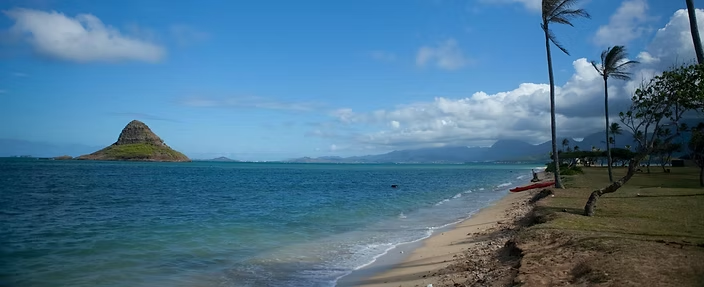
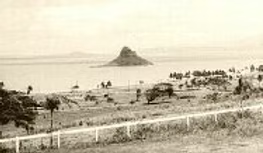
Pahulu brought the teachings of their laau lapaau. these teachings were done through dreams.It was said to have dealt in sorcery, however it may not have been called sorceryin those days but lapaau as it was a practical metaphysical science for those times. It was said the Pahulu ohana had relocated to Paliku (Kualoa) and built a fish pond here on these sands in ancient times. This is before the area of kualoa was known for its chiefly residence There are sections of the pa pohaku still visible in the sea of Mokolii. We say " Ke haa mai la o Mokolii i ke kai o hee ko Kapapa". The island of Mokolii dances in the octopus spearing waters of Kapapa. The old sugar mill is still there on the side of the road and this was near the location of the kuahu for the Pahulu ohana. On the side of Kaneohe side of Mokolii near the channel there was a pa pohaku or stone wall that ran on the sea floor for some yards and seemed to be gone or missing in certain sections. The pa is noticable only if you are paying attention to the area when holoholo. The pa or wall was about 8 feet in height off the sandy floor and about 20 feet wide at some places. The depth of the water at kai piha was about 20 or more feet in that area, getting shallow as you neared the shoreline of Paliku or Kualoa. The water and land area is not what it was like in the ancient times. Kualoa beach has lost a lot of sand and ocean front from the origional shore (hundreds of yards) due to homes being built along the road to Kaaawa. The seawalls they put up to protect the beach lots there have caused the currents to erode the beach at Kualoa park, and the currents have push a lot of sand around the back side of Kualoa park where Molii loko ia is at, and that area is accumilating more sand that has covered the stone wall of Molii pond. That wall on the sea side of Molii has makaha gates to let waterflow in from the ocean side. Now that area along the molii wall is all sand and the beach has formed there.
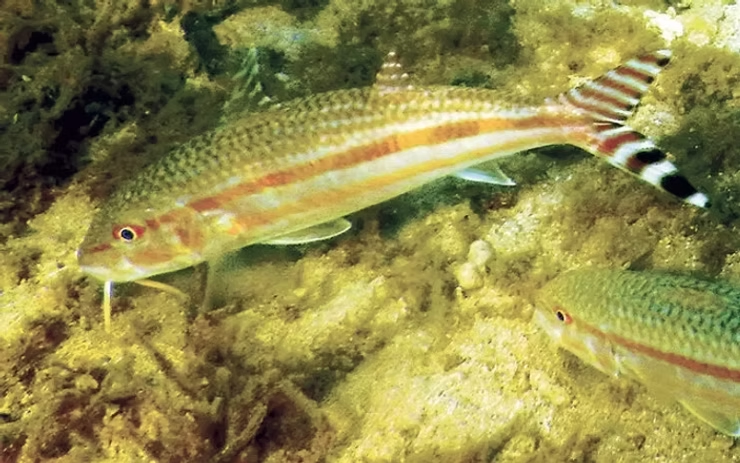
There was a certain type of fish known to cause night mares if eaten, and this was a weke that was found in these waters of Kualoa. This weke was a type called pueo or we call it Pahulu. The kamaaina said we should not eat of the Pahulu, especially the head, as it will give us visions, old dreams and make it hard to sleep well. This weke was ono when eaten raw with limu. Many of the people who caught pahulu from the area would eat the fish only if they fed their animals the head first. If the animal acted strangely or got sick after eating the head of the Pahulu, they would not eat the fish and kiloi back into the ocean. The pahulu was said to be a kinolau form of the Pahulu diety of the ohana.
Before the Kualoa regional park was built, there was just and old coral sand road into the Kualoa area, holoholo was good and there were still a lot of archaeological sites all around, remnants of the past. The old ohana would sleep on the beach and holoholo in the night on the papa with kukui lamps and torches. In the early mornings we would be in the water before the sun came up to look for hee.
There were the sounds of pahu drums in the wind and akualele coud still flying about the skies near and on the shores of Kualoa, Apua, Koholalele and Molii areas.
Kii: Kuialuaopuna
Hawaiian Mythology by Beckwith says that about the time of Liloa i, perhaps long before, chiefs flocked to Molokai. That island became a center for sorcery of all kinds. Molokai sorcery had more mana (power) than any other. Sorcery was taught in dreams. All these Molokai aumakua were descendants of the goddess Pahulu.
Pahulu was a goddess who came in very old times to these islands and ruled Lanai, Molokai, and a part of Maui. Through her that “old highway” (to Kahiki), starts from Lanai. As Ke-olo-ewa was the leading spirit on Maui who possessed people and talked through them, so Pahulu was the leading spirit on Lanai.
Some moolelo say Lani-kaula, a prophet (kaula) of Molokai, went and killed off all the akua on Lana'i. Those were of the Pahulu family. Some say there were about forty left who relocated to Molokai. The fishpond of Ka-awa-nui was the first pond they built on Molokai. Someof these ohana sailed to Oahu and landed on the beach opposite Mokoliʻi. The heiau of Pahulu is on the Kaneohe side of the Judd place about six hundred feet away from the old sugar mill at Hakipuʻu and out in the water toward Mokoliʻi. That is where they landed on Oahu. Near the old Judd place was a heiau for Kane-hoa-lani.
Popular legend attributes to Kaululaau the mischievous son of Kakaalaneo of Maui, the clearing of that island of the spirits who were its first inhabitants. Lanikaula’s grove of kukui trees and the place of his grave on the eastern point of the island of Molokai facing Maui and Lanai are still pointed out among the famous places on that island, and the rock islet shown where he buried his excrement.
Three of the descendants of Pahulu also entered into trees on Molokai. These were Kane-i-kaulana-ula (Kane in the red sunset), Kanei-ka-huila-o-ka-lani (Kane in the lightning), and Kapo. About four hundred trees sprang up in a place where no trees had been before, but only three of these trees were entered by the gods. The Lo family of Molokai, a family of chiefs and kahunas, are descended from Pahulu.
As for the Lo family, Andrews calls them "an order of priests who lived on the mountain Helemano [on Oahu?] and consecrated the bodies of the dead." The practice of dedicating the dead to become guardian spirits of a family aumakua was not known in the earliest period of the settling of these islands and did not come in, Kamakau thinks, until after the time of Wakea and the establishing of the tapus of chiefs. But as precise references to gods worshiped by ruling chiefs in the heiau in the form of images are studied, it becomes certain that they were sought because of their power not only to care for the soul of their keeper but to discover and ensnare the souls of those who had prayed him to death.
Kii: Kualoa Ranch
The god of Maui called Lo-lupe (Olo-pue, Ololupe) is the god invoked in the rite of deification of the dead or restoration of the dead to life. He is represented in the form of a kite (lupe) shaped like a sting ray. Some say his is an errand of benevolence and not of crime, and that he is sent into the heavens to ensnare the souls of those alone who have done evil. Malo calls him “the deity who took charge of [the souls of] those who spoke ill of the king, consigning them to death, while the souls of those who were not guilty of such defamation he conducted to a place of safety.” Warriors greatly feared this god. At the death of a ruling chief, it was under the rule of Lo-lupe that the divining priesthood (kahuna kuni) worked to detect, by means of burning a part of the chief’s body used as a “bait” (maunu), the secret enemy who had prayed him to death. Another branch of the priests’ work was to dedicate the body and convert it into an aumakua.
After Kamehameha’s conquest of Maui he sent a messenger to Kahekili to ask for the image of Lo-lupe, but as it was in the care of the kahuna Ka-opu-huluhulu who would not give it up, Kahekili sent instead a chip of the poison god Kalaipahoa and this became the Kane-mana-ia-Paiea (The mana power of Kane for Paiea, Paiea being a nickname for Kamehameha) which the chief kept to guard his life until the day of his death and for whom he built a god house and set up keepers.
Other gods besides Lo-lupe who are named as conductors of the souls of dead chiefs are Ka-onohi or Ka-onohi-o-ka-la (The eyeball of the sun) and Ku-waha-ilo (Ku of the maggot-dripping mouth). Kalakaua places the first in the skies to receive the souls brought to him by Ku-waha-ilo, but some say that Ka-onohi is the conductor and Ku-waha the receiver and devourer of souls.
All the images of war gods named under the Ku group are in fact sorcery gods. Kamakau names Ku-keoloewa and Ku-hoʻoneʻenuʻu as forming with Ka-onohi and Lo-lupe the Papa-kahui, an order (papa) of gods kept by Kamehameha to act as guides for the souls of the dead. It is, finally, at least significant that the god Kahoaliʻi with his tapus of the white haupu bird and the eyeballs of men, who was impersonated at religious ceremonies by a naked man with a peculiar marking and was allowed free eating with the chiefesses, and whose keeper had so powerful an influence over Kamehameha, resembles so closely the description of the Tahitian Tiʻi, god of sorcery, with his white heron as a fetcher and his images of wood or stone or coral which were sent out on errands of mischief.


Comments