
Ka 'Ai a Ka Manu

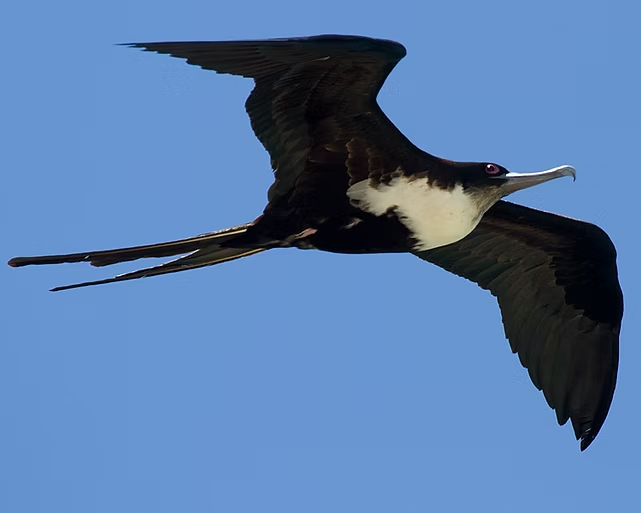
Kii: John H. Boyd III
In the practice of Hawai'i's fighting arts, there are many ancient names for the different strikes and blocks used in this practice. Some are named after winds, rains, people, birds, and other animals. One important manu or bird form that we will look at is the manu 'Iwa. The 'Iwa can have a total wingspan of 6 to 8 feet and is a great hunter of sea fish such as malolo (flying fish) and muhe'e ( cuttle fish). The 'Iwa catches its prey while in flight over the surface of the ocean, as well as diving in from above and harassing other sea birds, stealing food from them while in mid-flight, sometimes even forcing these other birds to regurgitate their catch. The 'iwa is referred to as a thief in Hawaiian culture, and is also compared to the 'iole or rat, as the 'iole is also a great and skillful thief and hunter. Because 'Iwa are graceful and skilled in flight and appearance, traditions have even compared them to an attractive person. Our Hawaiian dictionary refers to this comparison in the olelo "Kīkaha ka ʻiwa, he lā makani, poises the frigate bird, a windy day [of a handsome person] who draws attention, as does the ʻiwa bird poised aloft". Ka ʻiwa ālai maka, the 'iwa bird that fascinates the eye [an attractive person]. He iwa ka hoa e like ai (Kel. 134), just like one's friend the ʻiwa bird ( of one dressed up in finery). The 'Iwa has very unique colors. The males are very dark, with some variation in a green sheen around the head area. The males also have a red pouch of skin under their neck, which they can inflate during mating season. The females are larger with a greyish patch on their breast and under the neck. Their feathers were also used in the kahili (feather standards of the chiefs) and ahu'ula or feather capes of our prominent alii. The 'Iwa can be compared to a great and handsome warrior, who is skilled at being smart, adaptive in combat, and physically gifted. The 'iwa soar and glide in the upper thermal currents, enabling them to soar for great distances with little effort. Here are some lua strikes named after various manu:
Haehae-ka-manu-o-Kāne-aloha, Au-koaʻe-ua-mā-lie, Hakakā-a-moa, Ka-ʻēheu, Ka-ʻio, Ka-ʻuaʻu-kaha, Ka-ʻuaʻu-komo-hewa, Ka-ʻuaʻu-lewalewa, Pua-ka-uahi-haehae-ka-manu, Kikaha

Kii: G. McCormick
This is just part of an older chant in Lua, composed by Kekiloopu
Nakeke ka lani e nakeke
Ku’i lua ka pōhaku i Makalii
Hulili ka maka i ka uila
Naue ke olai i ka moku
Owa i loko o Ikuwa
Paapa’ina i ka malama
Lohea ka leo i ka hanehane
Ala ke kai uli, kai kea...
The heavenly skies clatter and rustle,
The stone club strikes twice at Makalii
The eyes are dazzled by the flashing of lightning
The quake of the earth moves the island
Roaring in the time of Ikuwa
Sounding in the month
Faint voices are heard
The dark and light forms arise...


Comments