top of page

Donate
Mo'olelo
KUʻIALUAOPUNA preserves the Hawaiian art of Lua by grounding education in ancestral tradition. By drawing from our moʻolelo and history, we bring ancient knowledge into a modern profession. Join us every month as we share stories that connect our Pacific cultures, inspire self-discovery, and honor our collective past.
Search


Ka Ai a Ka U'i
Kii: Ku'ialuaopuna Ua olelo ia o ka haumana i ka olohe ana, pehea e hoopaa ai i ka ai a ka lua? I mai ka olohe iaia nei, ake aku ka manao e ike maka i ka paio o ka lani. Helelei ka hunehune mai, mehe ua ke ano! When the seeker asked, "How do we master the strokes of our profession?" the Olohe spoke: “The eyes of the mind perceive the battle within the clouds; from the mist, the minute fragments emerge like falling rain.” To internalize the strokes—a discipline meant to expand

Kuialuaopuna
Feb 242 min read


Ulana
Kii: Hawai'i Life It begins the moment the attack is released—whether it is a strike unleashed with a mea kaua ( weapon) or the simple stroke of an arm. This release of energy starts with a buildup of internal tension, cascading through the shoulders, arms, and hands. To master this, one must perceive the very first signs of that tension. By executing a strategy and implementing a counter-strike before that energy can fully transition into the limb, you ensure the opponent’s
Kuialuaopuna
Feb 241 min read


'Ai ha'a Lua
Hilo Pali Ku Kii: No'eau Peralto The Hawaiian Dictionary, Mary Kawena Puku'i and Samuel H. Elbert defines ‘aiha‘a as a hula step performed with bended knees, characterized by a style that is low and "bombastic." Yet, in the realm of Lua, ha‘a is more than a step; it is a foundational posture of balanced power. By maintaining a low center of gravity, the practitioner achieves a fluidic grace that harmonizes the rigid strength of Kū with the flexible yielding of Hina. This stan
Kuialuaopuna
Feb 243 min read


Hikiau Heiau, Kona, Hawaii
June 22, 2019 by Peter T Young Kii: Images of Old hawaii After sailing around the island and exploring its northern and eastern sides, Captain Cook landed at Kealakekua Bay early in 1779. When Cook arrived at Kealakekua, “they called Captain Cook Lono (after the god Lono who had gone away promising to return).” (Kamakau) When Cook went ashore, he was taken to Hiki‘au Heiau and was seated above the altar and covered with a cloak of red tapa like that about the images. Both chi
Kuialuaopuna
Feb 243 min read


Mapulehu
Photo: Gourmet Hawaiian Kawa He Upu Papai'awa a Papa Eia Ka awa e ke akua, he ai naunau e ke akua He ai na kini, na ka mano a me ka lehulehu o ke akua O ke akua i ka po loa, o kini o ke akua lau a menehune ke akua Mai ka hikina a ke komohana, mai ka la kau a ka la komo Mai kai Koolau a kai Kona Mai ka paa i luna a ka paa i lalo, mai ka hookui a ka halawai E halawai apau, eia ka ai ke o, eia la he awa He awa nana pono, he awa nana hewa He uli pono, he uli hewa He ola, he make,
Kuialuaopuna
Feb 232 min read


'Awa Mōʻī
Kii: Kawika Winters Awa Mōʻ ī is a dark variety of Hawaiian 'awa that is also used as an offering to the akua, because of its dark color on the visual stems, like 'awa Hiwa. Its ancient use was for ceremonial practices for the akua, kahuna and the chiefs of Hawaii. The word Mōʻ ī according to the Hawaiian Dictionary by Mary Kawena Pukui ,and Samuel H. Elbert means sovereign, monarch, majesty, ruler, queen. (Perhaps related to ʻī, supreme. According to J. F. G. Stokes,
Kuialuaopuna
Feb 233 min read


'Awa Opihikao
Photo: Hawaiian Cultivars This variety of 'awa was located by our own keiki o Puna, 'anakala Jerry Konanui in his ohana's aina of ʻOpihikāō, Puna, Hawai'i. The ancient name may have been forgotton today so variety of awa was named after the aina it was discovered in at that time. This 'awa is also called Hiwa pu'u or Hiwa pu'upu'u by some Hawaiians. According to Hawaiian 'Awa - views of an ethnobotanical treasure, " Its growing habit is erect. ʻOpihikāō has been known to rea
Kuialuaopuna
Feb 232 min read
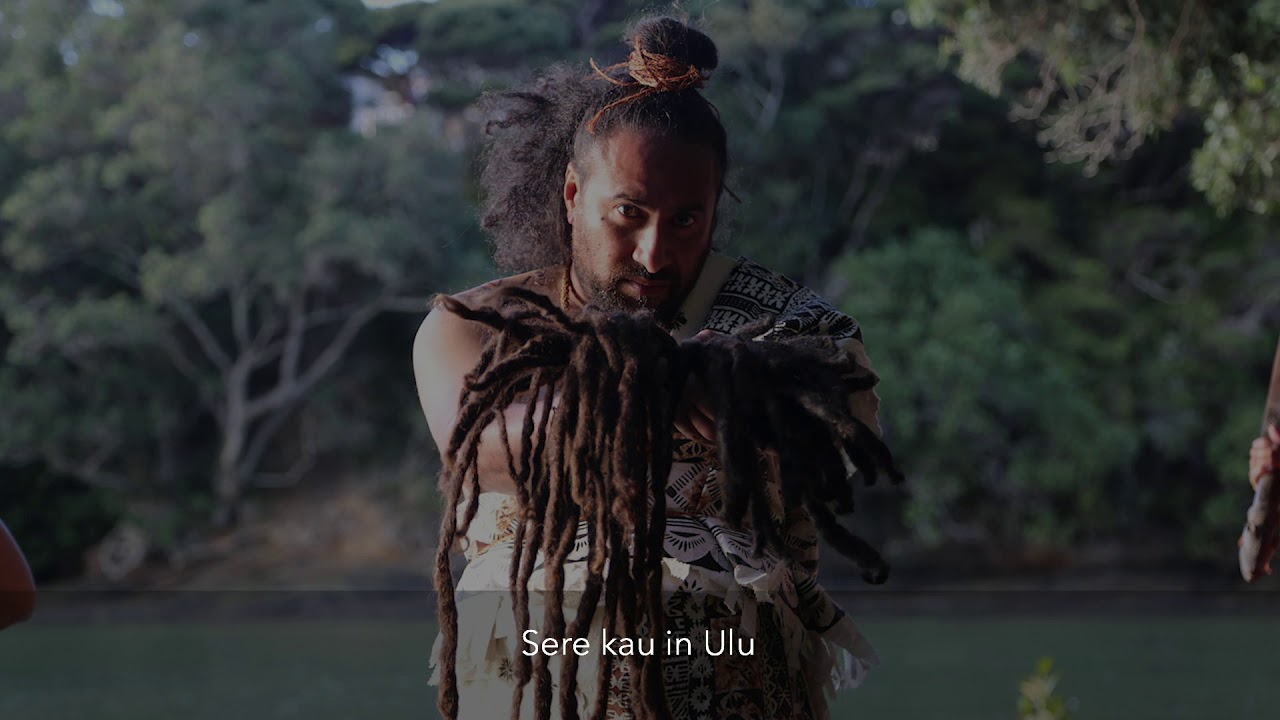
Daren Kamali - Fijian sali (warrior club) and iUla (throwing club)
From the Peabody Museum exhibition Uncovering Pacific Pasts: Harvard’s Early Endeavors in Oceanic Anthropology. Video copyright President and Fellows of Harvard College. Featuring a Fijian sali (wooden warrior club)from Fiji, pre-1860. © President and Fellows of Harvard College, Peabody Museum of Archaeology and Ethnology, PM 61-8-70/3935. And featuring a iUla (throwing club) from Fiji. U.S. Exploring Expedition, 1840. © President and Fellows of Harvard College, Peabody Museu
Kuialuaopuna
Feb 231 min read


He Upu Awa Akua
'Awa the drink of our kupuna. It is the highest offering one can give. Kii: Ku'ialuaopuna Traditional: K'K' Ku'ialuaopuna Kahe ana ka lā’au wai ‘awa i a’e Mai ka honua a i ka lewa lani Nu’a ‘o Luna, Nu’a ‘o Lalo Eia ka wai a ke akua Ka lā’au wai akua E nānā i ke au mai lalo a luna Ka lā’au wai kapu na ka lani Ka lā’au i ho’omū ‘O wai ke inu i ka ‘ai? ‘O nā ‘ula ke ‘ai Eia ka alana i ke akua E inu i ka wai lani E
Kuialuaopuna
Feb 231 min read


Ka 'Awa 'Ili Lena o Puna
Kii: Ku'ialuaopuna Ka ‘awa ‘ili lena was a variety of ‘awa known to Puna. Its origins trace back to ancient times in the forested region of Kaliʻu and Mālama. It was said that the birds of Puna carried this ‘awa into the trees, and because of this, it became known as ‘Awa kau lā‘au a ka manu —the ‘awa placed in the trees by the birds. The grove where this yellow-skinned ‘awa grew was called Mauānuikananuha , which was also considered the body form of the god Kūlilikaua-i-kana
Kuialuaopuna
Feb 233 min read


Ke Ola
Photo: Lithograph (1819) by Jacques Arago depicting human sacrifice under the order of a kahuna in old Hawaiʻi. Where we go when we die is determined by the last thought in our mind before death. The same is true for sleep—where we go when we sleep is shaped by the final thought we hold before drifting off. Death and dying, from a modern perspective, are often understood only halfway. Many people see the death of the physical body as the end of one’s entire existence. Yet d
Kuialuaopuna
Feb 234 min read


Ka‘ao Ho‘oniua Pu‘uwai No Ka-Miki (The Heart Stirring Story of Ka-Miki)
Kii: Waiau -Paradise of The pacific 1922 HE WAHI MO‘OLELO NO KA ‘ĀINA A ME NĀ ‘OHANA O WAIKI‘I MA WAIKŌLOA (KALANA O WAIMEA, KOHALA), A ME KA ‘ĀINA MAUNA: A Collection of Traditions and Historical Accounts of the Lands and Families of Waiki‘i at Waikōloa (Waimea Region, South Kohala), and the Mountain Lands, Island of Hawai‘i Kepā Maly • Cultural Historian and Onaona Maly The tradition of Ka-Miki is about two supernatural brothers, Ka-Miki (The quick, or adept one) and Maka-
Kuialuaopuna
Feb 239 min read


Akaaka Ka Maka
Kii: Matthew Feeser As in ancient times, during certain phases of training, haumāna are taught not to look directly at the hoapaio while in close contact. Instead, they focus their vision slightly off to the side of the opponent, allowing them to perceive all aspects of the opponent at once. In some pa lua this practice is known as ʻākāka ka maka , while other hālau refer to it as nānā i aʻe . The art of perfecting this skill is called Ka Hoʻākea a Kāne . To use this prac
Kuialuaopuna
Feb 232 min read


Ka Poe Kahiko
Kii: Marie Goff Essays upon Ancient Hawaiian Religion and Sorcery by Nineteenth-Century Seminarists Translated & Annotated by Bacil F. Kirtley and Esther T. Mookini Pg 77-85 https://core.ac.uk/download/pdf/5014451.pdf(https://core.ac.uk/download/pdf/5014451.pdf) These essays presented here are samplings from a total of thirty-four which were printed between January 5, 1865, and April 14, 1866, in Ka Nupepa Kuokoa (lit., The Independent Newspaper),1 possibly the most openminde
Kuialuaopuna
Feb 2114 min read


Ke Alii Nui o Ka Moku
This photo was taken when the flow began to open up above Kapoho. Kii: Ku'ialuaopuna Here is the same photo from above, a close up of the smoke below. Kii: Ku'ialuaopuna ‘Ailā’au is the creator of our islands from distant times way before man was present, and way before Pelehonuamea came from Polapola. He is a relative to Pelehonuamea, who is well known throughout the world as the creator of lands here on Hawaii'i Kuauli. He was among the gods that sunk the mole of this land
Kuialuaopuna
Feb 202 min read


Keawenuiaumi
Ruling Chiefs of Hawaii KAMEHAMEHA SCHOOLS PRESS • HONOLULU SAMUEL M. KAMAKAU KAMEHAMEHA SCHOOLS Copyright 1961 Pgs. 34-46 Kii: Ku'ialuaopuna The Story of Keawe-nui-a-ʻUmi At the time of ʻUmi-a-Liloa's death the kingdom of Hawaii was at peace. He had commanded that the kingdom be divided among his two sons and Kapu-kini, the daughter of Liloa, ruling chief of Hawaii. The two sons [were] Ke-liʻi-o-kaloa
Kuialuaopuna
Feb 2022 min read


Aka O Ka 'Awa
Kii: Ku'ialuaopuna O ke aka ka oukou e ke akua! This phrase, deeply rooted in Hawaiian tradition, speaks to the essence, the spiritual mana, reserved for the honored ancestors. Aka, meaning reflection, image, or likeness, goes beyond a simple visual representation. It embodies the faint glimmer before the moon's rise, the essence of an offering rather than the physical form. In essence, "ʻO ke aka kā ʻoukou, ē ke akua, ʻo ka ʻiʻo kā mākou" translates to "yours is the essence,
Kuialuaopuna
Feb 202 min read


HAWAIIAN LEGENDS OF GHOSTS and GHOST-GODS
Photo: Ku'ialuaopuna W. D. WESTERVELT Boston, Ellis Press [1916] HOMELESS AND DESOLATE GHOSTS pages 246-256 The spirits of the dead, according to a summary of ancient Hawaiian statements, were divided into three classes, each class bearing the prefix "ao," which meant either the enlightened or instructed class, or simply a crowd or number of spirits grouped together. The first class the Ao-Kuewa, were the desolate and the homeless spirits who during their residence in the bod
Kuialuaopuna
Feb 2016 min read


Ka Mole o Papahanaumoku
Kii: Ku'ialuaopuna Living arts, such as voyaging, fishing practices, dance forms or fighting forms of the Pacific Islanders today are traditions passed down from a long and ancient genealogy. Through force and manipulation, colonialists around the globe subjugated their these indigenous people and depleted their cultural resources, such the people, lands and traditions. Because foreign influence and culture has been a part of the Kanaka Maoli for many generations, non traditi
Kuialuaopuna
Feb 203 min read


Kaala And Kaaialii A LEGEND OF LANAI
Photo: Ku'ialuaopuna HAWAIIAN FOLK TALES A COLLECTION OF NATIVE LEGENDS COMPILED BY THOS. G. THRUM Chicago: A.C. McClurg & Co. [1907] pg 156-179 W. M. GIBSON Kii: Ku'ialuaopuna BORDERING upon the land of Kealia, on the southwest coast of Lanai, where was a pahonua , or place of refuge, are the remains of Kaunolu, an ancient heiau , or temple. Its ruins lie within the mouth of a deep ravine, whose extending banks run out into the sea and form a bold, bluff-bound bay. On the to
Kuialuaopuna
Feb 2027 min read
bottom of page